Ecosystems & APIs
Runtimes
The runtime versions your project pins, in all six ecosystems, checked against their end-of-life dates. Teire reports them, and never changes a runtime for you.
| Runtime | Where Teire reads it |
|---|---|
| Node.js | Volta, .nvmrc, .node-version, or engines.node in package.json |
| Python | .python-version, else the requires-python floor in pyproject.toml |
| Go | the toolchain line in go.mod (what actually runs), else its go line |
| Ruby | .ruby-version, else the ruby line in the Gemfile |
| Java | Gradle's JavaLanguageVersion.of(…), JavaVersion.VERSION_… or sourceCompatibility; Maven's maven.compiler.release, maven.compiler.source or java.version |
| Rust | a numeric rust-toolchain channel (1.70); stable always runs the supported release |
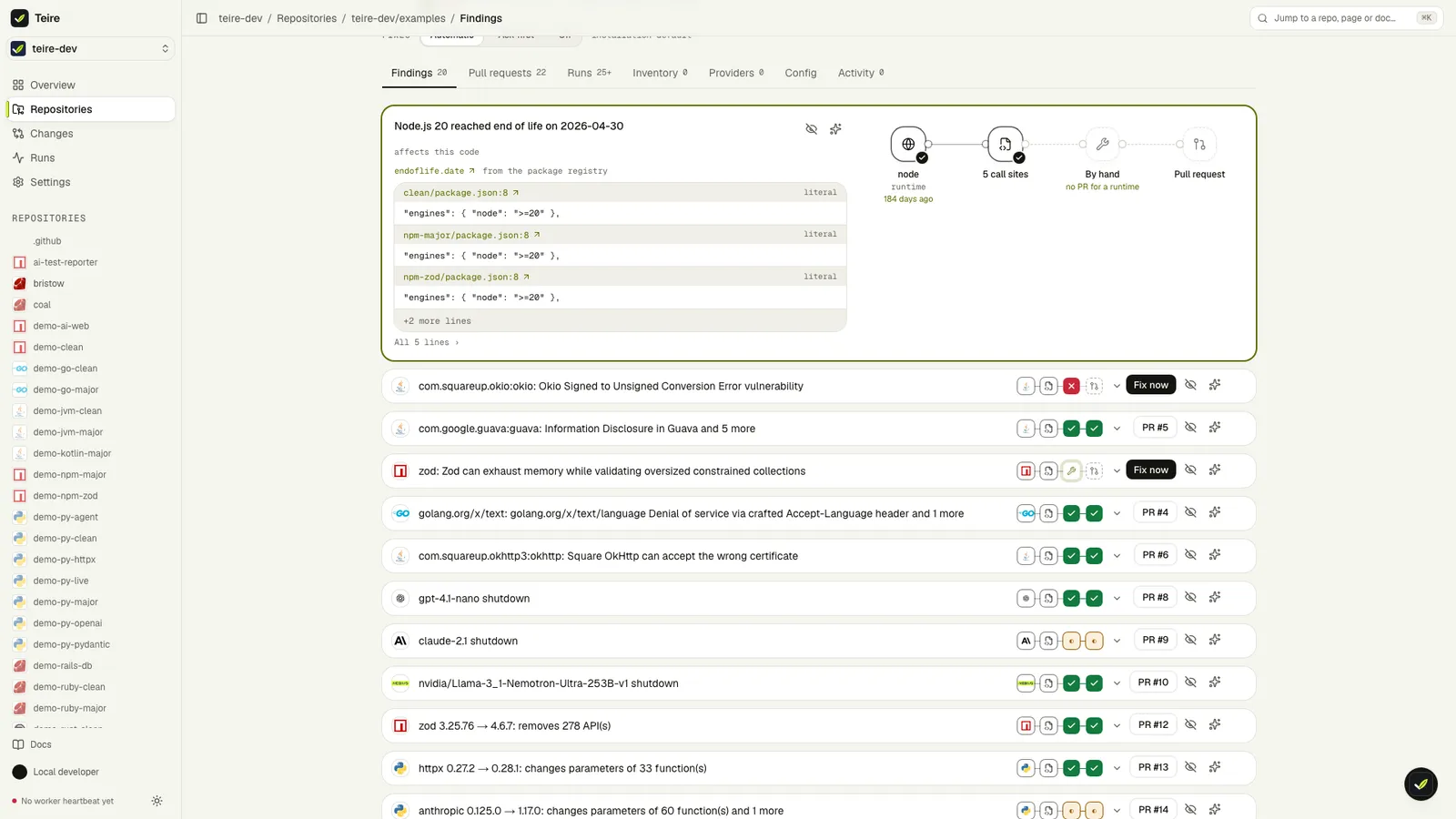
Dates come from endoflife.date, cached for 24 hours. A runtime is flagged once it is past its end of life, or within 180 days of it. The notice names the newest maintained line, the LTS line for Node.js.
Runtime notices appear in the onboarding PR, the web dashboard, the public report and the CLI, with the line that sets the version. They never open a pull request, and they have no dry run.
Limits
Rust supports only its newest stable release, so any pinned numeric toolchain is flagged once a newer one ships.